
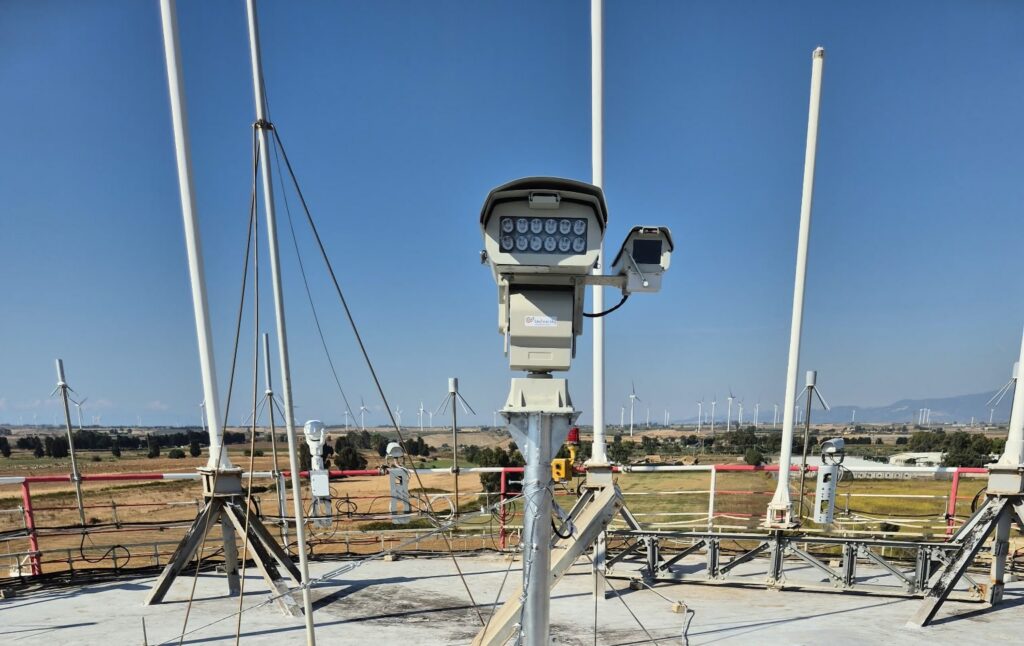
When you’re developing systems that support air navigation services, the margin for compromise is essentially zero. Reliability isn’t a “nice to have,” it’s the baseline. That’s the world in which Techno Sky operates, and it’s what makes their decision to build around the Arduino® Opta™ RS485 microPLC responsive to the project’s identified requirements.
Techno Sky is an ENAV Group company that manages and maintains hardware and software systems supporting air navigation services, and develops innovative technologies for the Air Traffic Management (ATM) sector. Their R&D department works on solutions for air navigation service providers (ANSPs), airports, aviation authorities, and organizations worldwide – systems designed for use under demanding operational conditions.
The challenge: a compact, reliable visual emergency signaling system
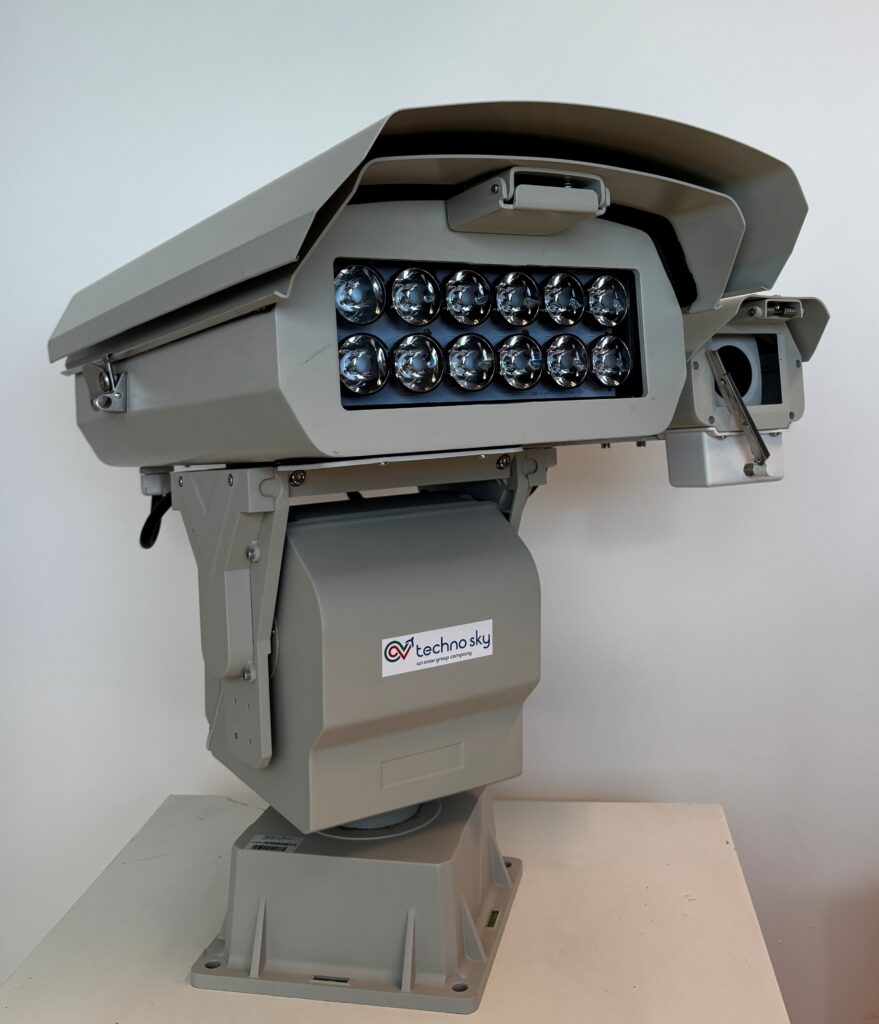
The project that brought Techno Sky to Arduino was the development of a visual emergency signaling system for integration within ENAV’s Digital Tower environment. The requirements were unambiguous: industrial-grade reliability, compact form factor, continuous operating capability, Ethernet and industrial communication interfaces, integrated I/O, and the ability to develop and maintain the system without building dedicated custom electronics from scratch.
A fully custom hardware design was on the table, but it would have added significant time and complexity – hardware design, integration, and validation cycles that would delay the project without necessarily improving the outcome. The team needed a platform that would let them focus on application logic and system integration, not on reinventing the controller underneath it.
Opta: a non-conventional, but versatile and effective path to innovation
The R&D team evaluated conventional PLCs, custom embedded electronics, and single-board computers before landing on Opta. It selected Opta based on its combination of industrial characteristics and software flexibility in a single package. The team determined that the conventional PLCs it evaluated offered less development agility for this project. Custom electronics would have added hardware design overhead. The single-board computers evaluated by the team did not meet the project’s identified specifications.
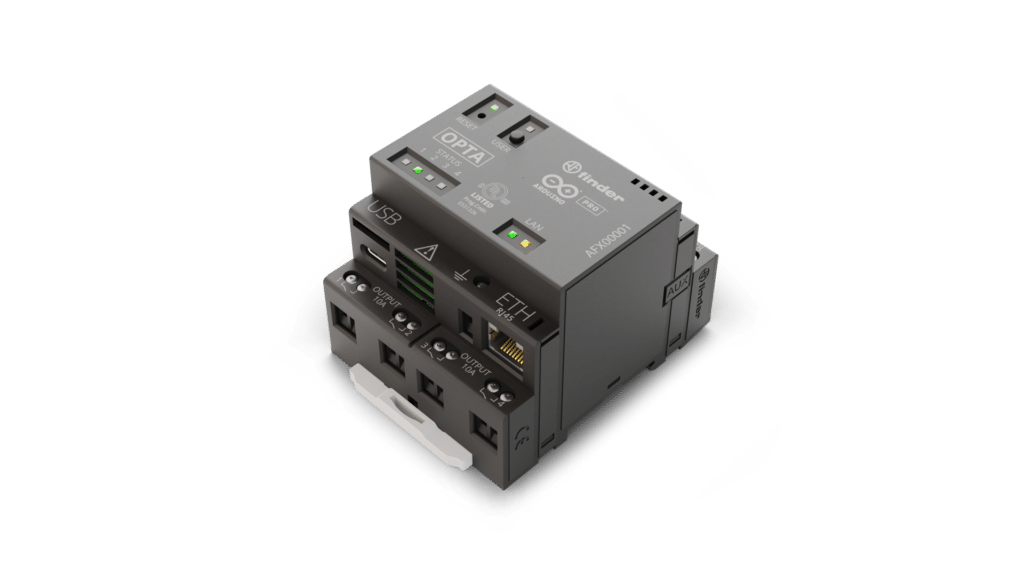
The Opta RS485 offered integrated Ethernet and RS485 communications, relay outputs, and the flexibility of the Arduino programming environment and library ecosystem – all in a compact, DIN rail-mountable form factor designed for industrial applications. Critically, it allowed new functionality to be implemented through software without adding dedicated hardware, a quality that would prove important as the system evolved.
An architecture for in-house deployment within the year
In the deployed system, Opta acts as the main embedded controller, managing signaling outputs, Ethernet communication, RS485 communication with external equipment, operating modes and timing, supervision functions, and communication integrity and security. The system currently implements eight signaling modes on a single controller – functions that the Techno Sky team determined could otherwise have required additional hardware or a more complex architecture.
The main engineering challenge during development was coordinating communications, physical outputs, signaling sequences, and supervision in parallel. The team addressed this through a modular software architecture and the use of watchdog and communication-validation mechanisms – approaches intended to support a manageable codebase and consistent system behavior. Development was carried out internally by Techno Sky’s R&D team using Arduino documentation, libraries, and development resources.
According to Techno Sky, the project started in October and reached operational deployment in under 12 months. One Opta controller integrating more than ten main control functions, designed for continuous operation, with the same architecture carried through from R&D prototype to operational system.
From prototype to production on the same platform
That last point deserves emphasis. R&D teams may prototype on one platform and later transition hardware when moving toward deployment. Techno Sky didn’t need to make that transition. The architecture based on Opta developed during R&D was the architecture retained for operational use – a decision that they report was based on its assessment of the platform for this application.
Techno Sky summarized their experience: “Opta enabled us to move rapidly from an R&D concept to an operational solution. Its industrial hardware, combined with the Arduino programming environment and library ecosystem, allowed us to integrate and expand multiple functions without increasing hardware complexity. The fact that we are retaining Opta in the operational system reflects our positive assessment of its effectiveness and reliability for this application.”
More ideas, more innovation
The Techno Sky team has been working with Arduino platforms across their R&D activities for several years, and this project showcases their reinforced confidence in their chosen Arduino product line. Future applications under consideration include monitoring systems, remote control, sensor integration, robotics, automated test equipment, and ATM infrastructure – a range of potential uses that Techno Sky is evaluating.
For teams facing similar integration challenges – multiple control and communication functions, demanding reliability requirements, and pressure to move quickly from concept to deployment – Techno Sky’s assessment is direct: Opta is well suited, in Techno Sky’s assessment, when those functions need to come together in a compact system, without the overhead of custom hardware design.
Ready to explore options for your industrial application? Find out more about the Opta family and Arduino’s industrial-grade range at arduino.cc/pro.
Arduino, Opta, and the Arduino logo are trademarks or registered trademarks of Arduino S.r.l.